Booklets are an excellent way to communicate information effectively and efficiently. Whether it’s a company brochure, product catalogue or educational guide, booklets can provide comprehensive information in a compact and easy-to-read format. However, choosing the right type of binding for your booklet is essential to ensure that your printed brochure is not only durable but also aesthetically pleasing. In this blog, we will explore the best types of binding for booklets and their advantages and disadvantages.
Saddle stitch book binding is a popular choice for booklets that have a low page count.
What is saddle stitch binding? Sometimes called ‘saddle binding’ or ‘staple binding’, this method involves folding the pages in half and stapling them along the spine. The final result is a booklet that is both durable and easy to read. One of the main benefits of saddle stitch binding is that it is a cost-effective option. However, it’s important to note that saddle stitch binding is not suitable for booklets with a high page count, as the spine may not be strong enough to hold the weight of the pages.
This booklet binding method makes for perfect short brochures – the method is quick and effective and will serve well on printed brochures with a smaller amount of pages. Saddle stitched binding is also neat and discreet; the staples are simply in the spine of the printed brochure.
Why is it called saddle stitching? Because the pages drape outwards like a saddle!
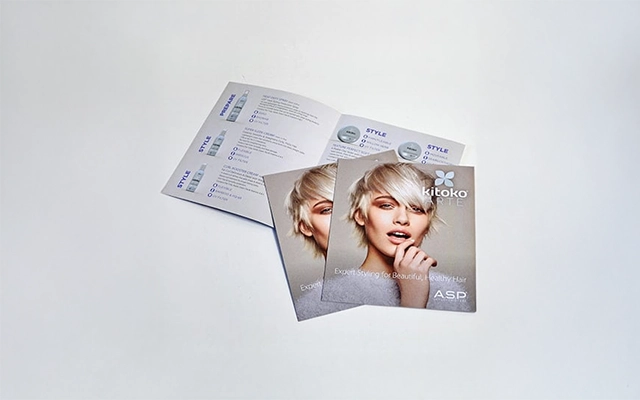
Perfect binding is a commonly used method for binding thicker booklets. This technique involves gluing the pages together at the spine, and then attaching a cover to the spine with adhesive.
The final result is a booklet that looks professional and can withstand heavy use. One of the main advantages of perfect binding is that it allows for a wide range of paper types and thicknesses. Additionally, perfect binding can be customized to feature a variety of cover options, such as glossy, matte, or textured finishes.
This booklet binding method is a popular one as perfect bound brochures are best for displaying higher volumes of information.
When it comes to perfect binding vs saddle stitch, perfect bound booklets are better for more pages and a more pleasing visual (no staples).
Wiro binding is a durable and stylish option for booklets that need to lay flat. This method involves punching holes along the spine and inserting a wire coil through the holes. The final result is a booklet that is easy to read and can be opened and closed effortlessly. One of the benefits of wiro binding is that it can accommodate a high page count while still remaining secure. Additionally, wire-O binding allows for a wide range of paper types and cover options.
We offer a wide range of wiro bound books: choose your size, binding edge and even wire colour! Choose from silver, red, blue, black or white wiro brochure binding!
You may also find wiro bound brochures under the term: spiral bound booklets. Spiral book binding is similar to wire-O binding, but instead of a metal wire coil, a plastic coil is used to bind the pages together. This method is ideal for booklets that need to lay flat, such as training manuals or workbooks. However, often the two terms are used interchangeably.
Choosing the right type of binding for your booklet is crucial to ensure that it meets your needs and exceeds your expectations. We’d recommend you consider the following before designing your custom printed brochures:
Saddle stitch binding is a cost-effective option for booklets with a low page count.
Perfect binding is a popular choice for thicker booklets.
Wire-O binding and spiral binding are durable and suitable for booklets that need to lay flat.
Consider your specific needs and budget when selecting the best type booklet binding for your needs, and always work with a professional printing company to ensure that the final product is of the highest quality. As an experienced booklet printers, we can help you with your brochure binding options! Just get in touch with our friendly team today!

Printed Brochures
Unit 4-10 Stanton Road Ind. Est.
Stanton Road
Southampton
Hampshire
United Kingdom
SO15 4HU
© printedbrochures.co.uk 2026 | Unit 4-10 Stanton Ind. Est, Southampton, Hampshire, UK SO15 4HU